Your platform. Calibrated.
Delft-style stability. Direct geometry editing. Every knob explained. Portable.
Explore Your Edge NA Workflow →Delft-style stability. Direct geometry editing. Every knob explained. Portable.
Explore Your Edge NA Workflow →Tune the RM curve for form vs ballast.
Edit cross sections directly.
Calibrate the DSH lanes.
Portable NA profile and hull-section artifacts.
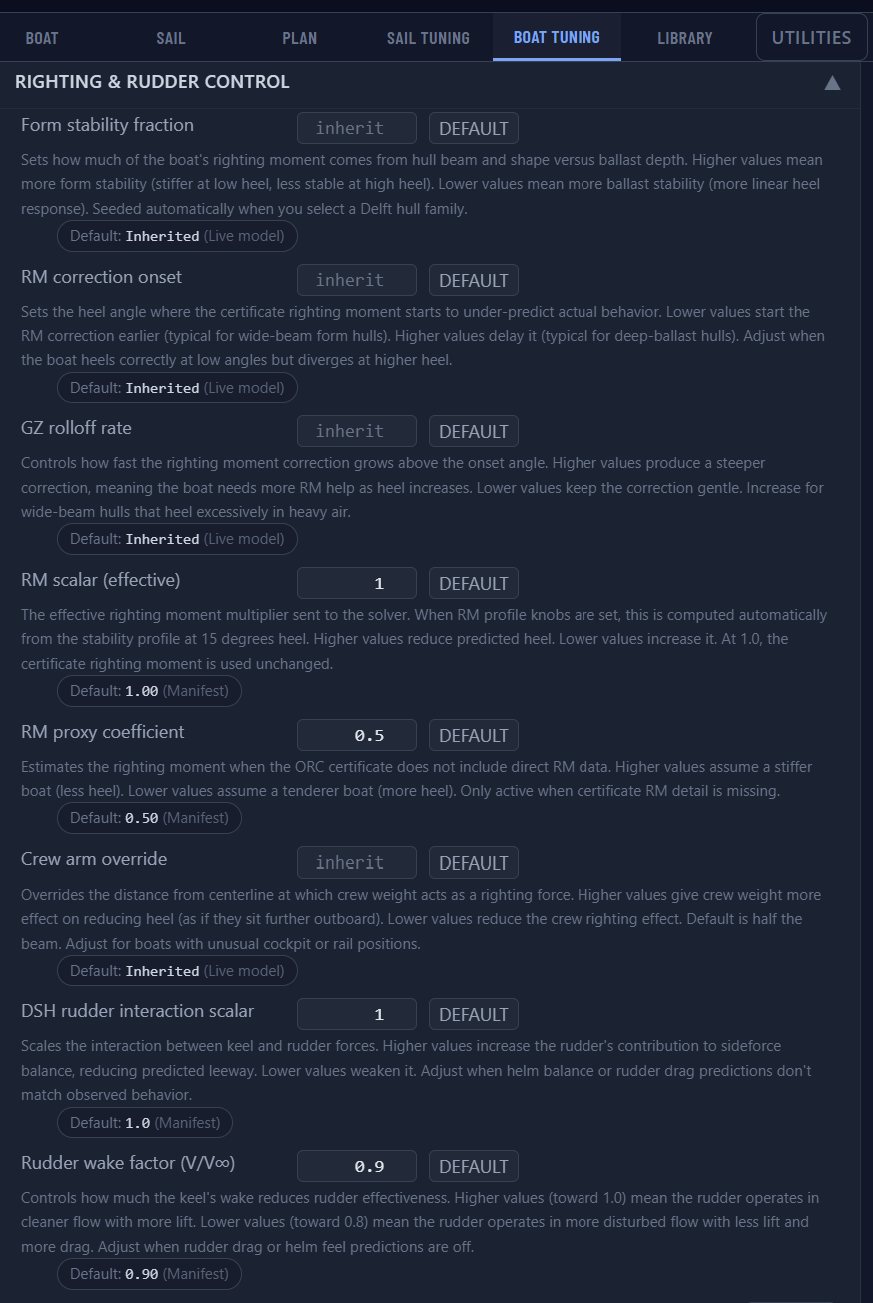
Three knobs from GZ curve analysis. Form stability fraction, RM correction onset, and GZ rolloff rate.
Select a Delft hull on the Boat tab and they seed automatically. Form hulls get a higher fraction, lower onset, steeper rolloff. Ballast hulls stay closer to the certificate RM. Adjust for your specific hull.
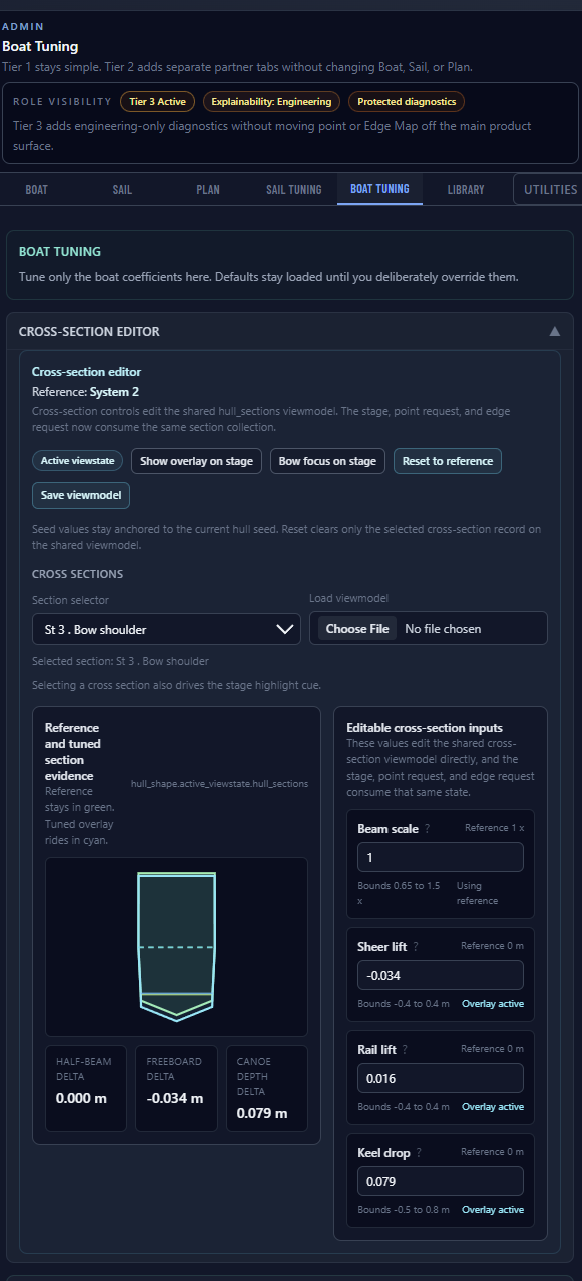
Select a station. Compare reference against tuned. Edit directly — Beam scale, Sheer lift, Rail lift, Keel drop.
The selected section highlights on the 3D stage. Save the hull-section viewmodel as a portable artifact. Reload it later from the same geometry basis.
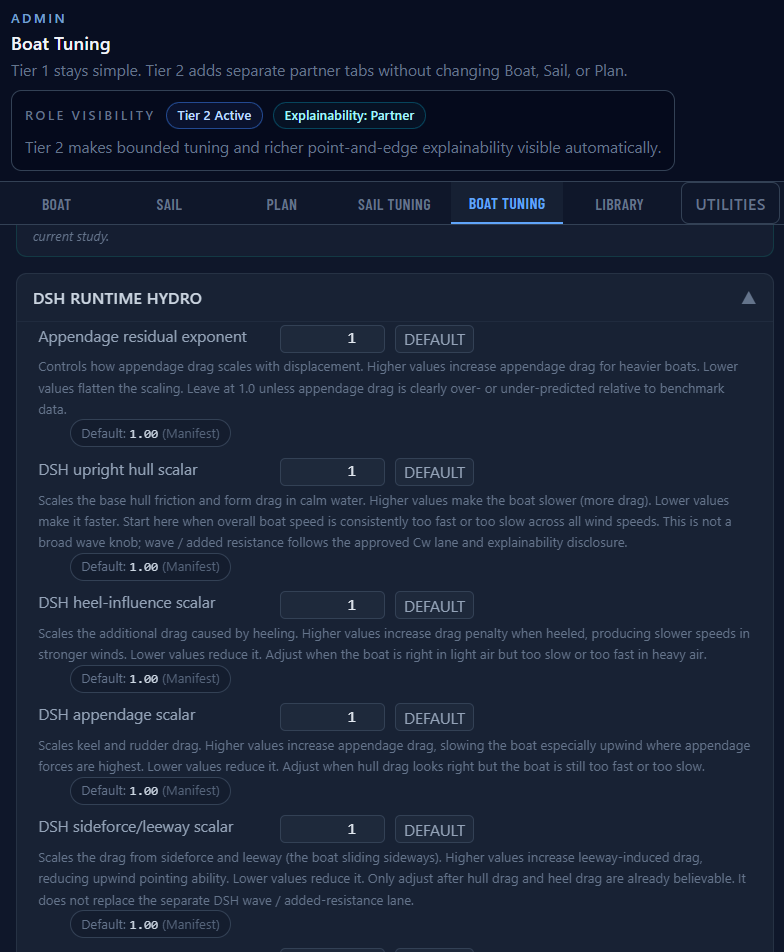
The runtime resolves upright hull, appendage, heel influence, sideforce and leeway, keel-rudder interaction, and wave-added resistance through governed DSH lanes. Each lane is individually tunable.
Every knob carries always-visible help — what it controls, what happens when you move it, when to adjust it.
Bounded platform calibration. Load it on any boat. Sail lofts overlay their calibration on your foundation.
Cross-section editing state. Reload the same geometry basis without touching the canonical boat.
Full study snapshot when the whole context must travel — boat, tuning, hull sections, and study state.