Lift, Drag, and Everything in Between
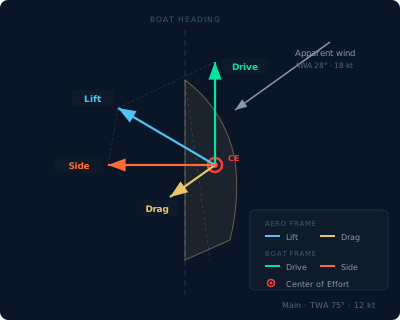
Each sail in the plan — main, jib, genoa, spinnaker, code zero — gets its own
force decomposition. Lift and drag coefficients are computed from the sail’s geometry
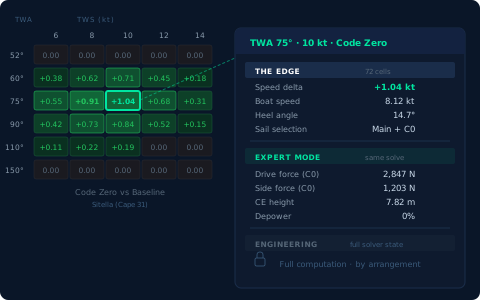
and the apparent wind angle. Those coefficients produce the drive force (forward) and
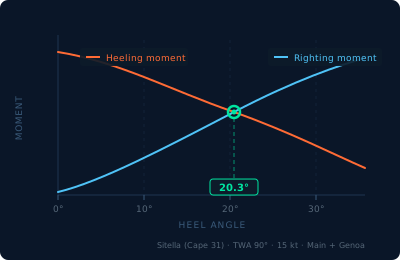
side force (heeling) that let the baseline sailplan and the candidate be compared at
the same wind condition.
Sails don’t operate in isolation. When a headsail sits in the main’s wind shadow
at tight angles, the model accounts for blanketing — the reduction in effective
wind that the downstream sail actually sees. The shape of each foil matters too:
aspect ratio, overlap, roach. Different sail shapes produce different force profiles
at the same wind angle.
At the professional tier, loft-specific sail shapes feed directly into these
coefficients. The generic geometry is replaced with measured cut-sheet data.